Unscripted SaaS · Interview
Malith Gamage on Building a Privacy-First Client Reporting SaaS
with Malith Gamage — co-founder of Zapdigits, Netherlands
Why this matters for SaaS: The best SaaS ideas often start as an internal tool for a problem you personally have. Malith built Zapdigits because he didn’t want to hand full database access to a non-technical co-founder — then pivoted to marketing agencies when that’s where the traction came from. It’s a working case study in listening to who actually pays, differentiating on a feature incumbents gate-keep (white labeling), and refusing to ship AI you can’t trust.
The conversation
Episode overview
Jeremy Rivera talks with Malith Gamage, co-founder of Zapdigits — a client reporting tool for marketing agencies built “privacy first” out of the EU. A software engineer with 15 years building products (including time at European unicorn Brevo), Malith started Zapdigits as an internal dashboard so he wouldn’t have to give a non-technical co-founder raw access to Stripe and the database. When he launched, the feedback came from marketing agencies instead of founders — so he pivoted, ran a lifetime deal to gather live feedback, and doubled down on small and mid-size agencies. His wedge: white labeling on every plan, not just the top tier. He walks through the messy state of AI SEO reporting, why a self-hosted LLM matters for GDPR, and why the number-one rule in SaaS is simply: don’t die.
Malith also wrote up the founding thesis on the Zapdigits blog: Building a Privacy-First Client Reporting SaaS.
What we get into
Highlights
- From internal Stripe/database dashboard to a full agency reporting platform — and why the pivot came from who gave feedback
- Making white labeling a baseline feature instead of a top-tier upsell
- Using a lifetime deal and webinars to buy live customer feedback early
- The chaotic reality of AI SEO reporting — same prompt, five different answers, domain authority be damned
- GDPR, self-hosted open-source LLMs (Llama), and keeping client data inside your own infrastructure
- Why shipping an AI feature that gives wrong answers is worse than shipping none
- The four value tiers of a pitch — money, time, objectives, identity — and helping agencies add reporting as a revenue stream
- Staying lean, stretching AWS credits, and the bootstrap-vs-investor question
The founding story
An internal tool that found its real market
Zapdigits didn’t begin as an agency product. Malith was working on another project with a non-technical co-founder who asked, every single day, what the Stripe revenue and database numbers looked like. Rather than hand over access to everything, he built a dashboard — which is why Zapdigits is an official Stripe partner with data connectors the bigger competitors don’t offer. When he launched to entrepreneurs and founders, the traction was thin. Marketing agencies, on the other hand, kept showing up. So he pivoted, ran a lifetime deal, collected a flood of live feedback, and set out to differentiate against entrenched players like Agency Analytics by focusing on small-to-mid agencies and putting white labeling on every plan.
AI, trust & GDPR
Your AI is only as smart as your schema
Zapdigits recently launched AI SEO reporting — querying ChatGPT, Gemini and others with the same brand questions and averaging the responses into a client-ready visibility and credibility score. Malith is candid that the space is a hot mess: ask the same question five times and get five different answers, and a domain-authority-zero landing page can get cited out of nowhere. (He’s written about monitoring ChatGPT visibility at scale.) The deeper AI ambition — letting agencies talk to all their data sources through an agent — runs straight into EU privacy law, which is why he’s exploring self-hosted open-source models over an OpenAI wrapper, keeping data inside Zapdigits’ own infrastructure. His hard rule: a reporting tool lives and dies on trust, so an AI feature that returns wrong answers is worse than no AI feature at all.
In their words
Quotes from the episode
“In the SaaS business, the main advice is: don’t die. As long as you can stay alive for three or four years, you’re good.”
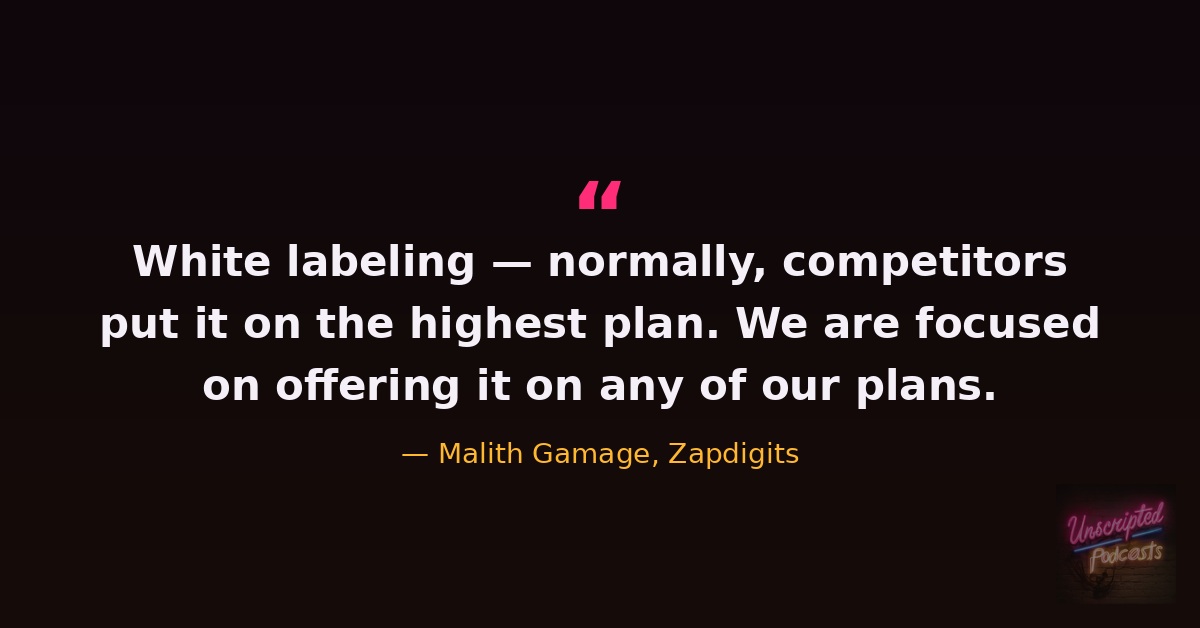
— Malith Gamage, Zapdigits“White labeling — normally, competitors put it on the highest plan. We are focused on offering it on any of our plans.”
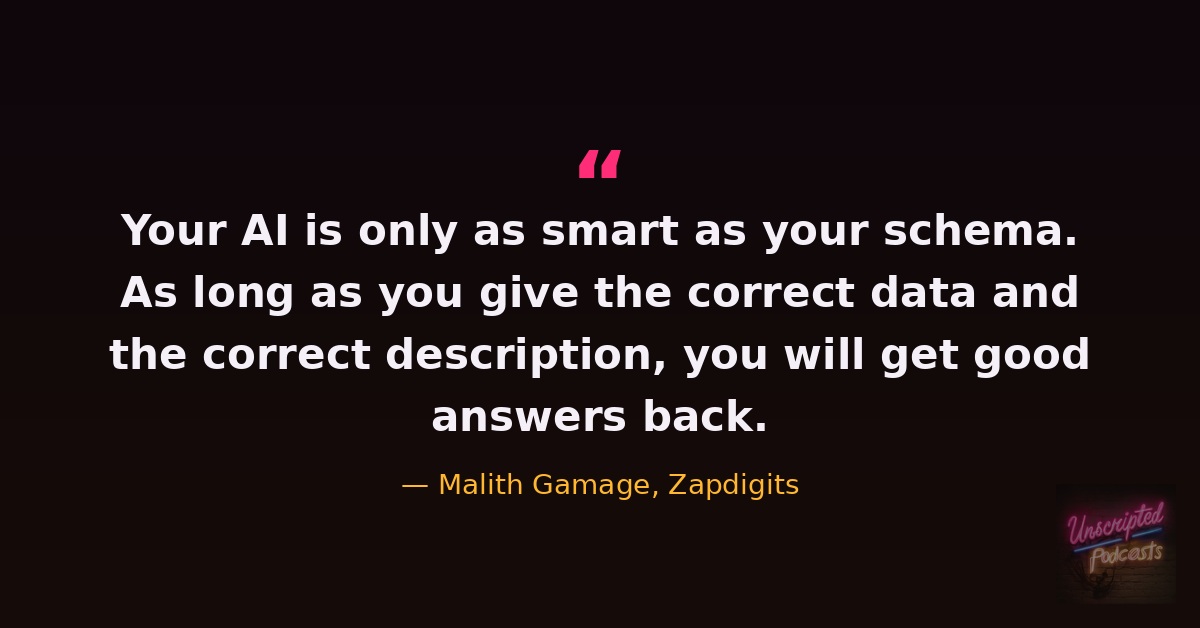
— Malith Gamage, Zapdigits“Your AI is only as smart as your schema. As long as you give the correct data and the correct description, you will get good answers back.”
— Malith Gamage, Zapdigits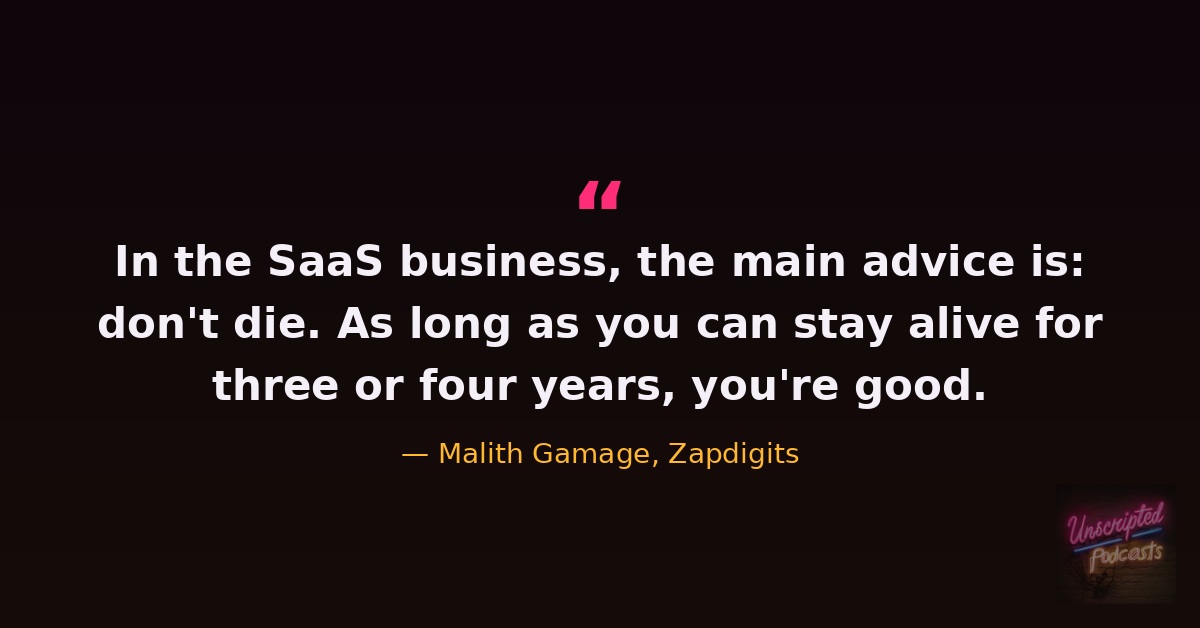
Ideas worth stealing
Key takeaways
- White labeling from day one as a baseline feature — not a premium add-on — is a genuine differentiation play for agencies who need branded dashboards without top-tier pricing.
- AI SEO reporting is still embryonic and chaotic; a standardized report aggregating multiple AI sources provides value while the space matures.
- Data accuracy and trust are existential for a reporting platform — a wrong AI answer erodes the agency’s client trust and creates more work, not less.
- Privacy-first infrastructure (self-hosted LLMs, no third-party data sharing) is a real product differentiator in Europe, not just a compliance checkbox — see the Zapdigits mission.
- Build the pitch up the value tiers: past time savings toward enabling agency objectives and identity. Reporting can itself become an agency revenue stream.
- Bootstrap as long as possible, but have a clear end-of-business plan before taking investor money — VC often redirects product priorities toward short-term returns.
Connect with Malith
Where to find him
Try it: Zapdigits.com · Read his post Building a Privacy-First Client Reporting SaaS · Explore the Zapdigits blog & public roadmap · Connect on LinkedIn.
Stay in the loop
Get new SaaS founder interviews in your inbox
The sharpest takes on growth, product, and go-to-market — delivered as each new episode drops.